Image

Verifica le date inserite: la data di inizio deve precedere quella di fine

Jussi Pylkkänen, fondatore di Art Pylkkänen ed ex Presidente Globale di Christie’s.

Image

Jussi Pylkkänen, fondatore di Art Pylkkänen ed ex Presidente Globale di Christie’s.

Jussi Pylkkänen

Leggi i suoi articoli

2025 was a very unusual year in the art market. After a near-disastrous financial year for the auction houses in 2024, which saw their worst results in 15 years, 2025 also started quite poorly but finished very well. The major end-of-year auctions in New York had a notable spring in their step, delivering a very healthy sold total of over $2 billion in a matter of only 5 days. Average lot values increased, sell-through rates were high and the top 25 works with pre-sale estimates above $10 million sold very well. The art world breathed a huge sigh of relief. The first half of 2025 had been fragile against a backdrop of global uncertainty caused by countless elections across the world, a rise in conflicts, threats of raised tariffs from America and a generally opaque financial environment. Fortunately, there was a tremendous art market rally in the second half. We expect a few more shifts and challenges in this new year but confidence is certainly back. Here is what we learnt at the top of the market in 2025 and how it might impact the art market in 2026.

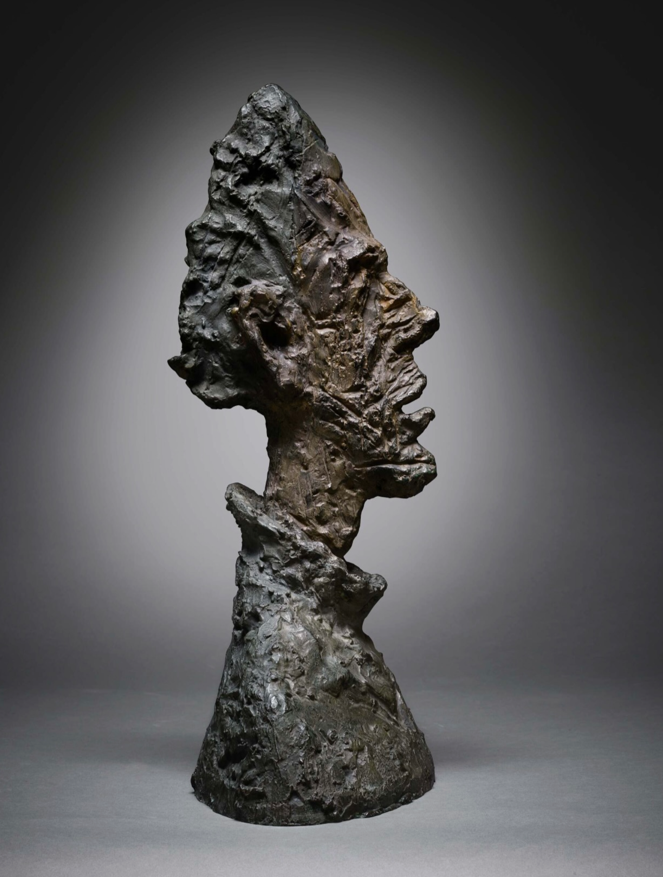
Alberto Giacometti, «Grande tête mince», 1954, Collezione Sheldon Solow, invenduto da Sotheby’s.

Peter Doig, «Ski Jacket» venduto da Christie’s a 14,3 milioni di sterline © Christie’s 2025.

The return to a healthy competitive market demands sensible pre-sale estimates

We must remind ourselves that 2025 started slowly and with something of a hangover from the previous year. In May, after shaky Spring sales in Europe, the art world was looking for more positive news and both houses were desperate to find a major collection of fresh material to change the mood; Christie’s found it with a group of fine works from the collection of Leonard and Louise Riggio, which included works by Mondrian, Picasso and Magritte.Although many of the works had been on the market quite recently and were very firmly priced, they performed well and garnered a very respectable $272 million in the New York salerooms. In the mixed property sale Christie’s also offered a fine, rare Monet Poplars, which had been on view in an American museum for many years, and triggered a bidding war to make $ 43 million against a low estimate of $30 million. Sotheby’s were behind and keen to avoid a replay of 2024’s weak results. They were right in a sense, given that the first half sales at Christie’s and Sotheby’s were about to come in 6% down on the previous lacklustre year – indeed, both houses were pushing hard to find stellar material from major collections. Art market professionals were concerned that in-house estimating had remained at the levels of optimism seen in 2022 and questioned whether this aggressive approach was sustainable. Sales in the galleries were slowing down, but auction house specialists were nonetheless seeking to attract quality material with over-confident pricing. This has happened many times in the past and very public failures inevitably lead to the top of the market stalling. The clearest example of this was the performance of the late Sheldon Solow’s magnificent hand-coloured Giacometti Grande tête mince of 1954, announced by Sotheby’s as their major masterpiece of the New York Spring season. Ultimately, it failed to sell. Commentators unanimously felt that this major work deserved to succeed, but that its asking price was simply too high with an estimate “in excess of $70 million”. Whilst many felt that the Sotheby’s team had provided an overly robust estimate, it is noteworthy that two uncoloured bronze casts from the edition had realized significant prices over a decade before: $53 million at Christie’s in 2010 and $50 million at Sotheby’s in 2013. In different market conditions this strong estimating approach might have worked well; in a fragile market, such a valuation proved too bullish.Some observers also felt that Christie’s pricing of the Riggio collection had been set at very high levels which had led to reduced competition in the saleroom. On the positive side, both Sotheby’s and Christie’s reassessed their estimating strategies in the autumn, returning to the tried and tested maxim that “conservative estimates generate maximum competition”.

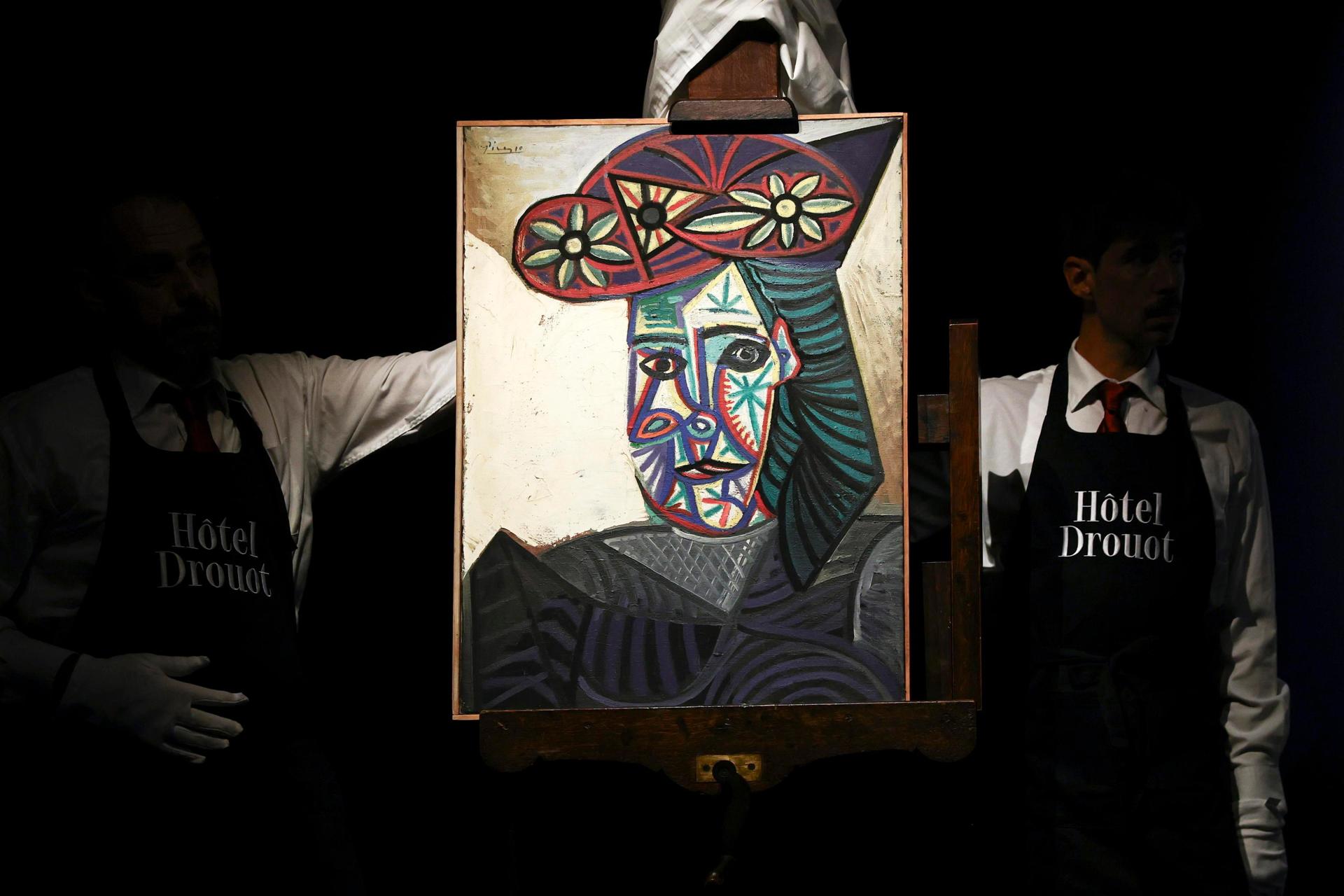
Pablo Picasso, «Buste de femme au chapeau à fleurs (Dora Maar)», 1943 venduto a 32 milioni di euro.

The power of Single-Owner collections and market lessons from the Pauline Karpidas sale in London, September 2025

The likely success of this estimating approach was perfectly illustrated by the “white glove” sale of the Pauline Karpidas Collection of Surrealist art at Sotheby’s in London in September. The 345 works were 100% sold across 3 sales, achieving a handsome $136 million against a pre-sale estimate of $80 million. Whilst from a masterpiece perspective this collection should not be compared to the Yves St Laurent collection sold in Paris, which triggered the revival of the market in 2009, both sales came at the perfect time when the market was desperate for a broad offering of fresh, unseen material at sensible estimates.
The London evening saleroom was packed and collectors were confidently drawn into countless bidding battles. The 55 lots in the evening sale were valued at $53 million and sold for $100 million. Initially, every lot in the sale carried a house guarantee. Over 70% of the works offered across the sales sold for over their top estimates and the vast majority sold for high prices directly to private collectors.
These tremendous results sent a strong message to the New York market: win collections, price them reasonably to encourage collectors back into the rooms and, if necessary, take a risk on the type of guarantee deal you offer the owners.

The success of the major works sold in London and Paris, October 2025

The Karpidas sale was followed by further successes in London and Paris driven by conservatively priced, good quality material from private collections. Whilst Christie’s sold well, Sotheby’s achieved their highest French total to date of $104 million, which was also up 50% on 2024. In addition to this, Frieze in London and Art Basel Paris were both outstanding fairs, attracting the world’s greatest collectors to Europe.
Suddenly, the best works offered at both the fairs and in the salerooms started to generate new levels of interest. These were more than just green shoots — multiple sales were secured at high levels. At Christie’s London, Peter Doig continued his steady rise towards the pinnacle of the 21st Century market with a tremendous £14.3 million for his Ski Jacket, against an estimate of £6–8m. Another artist deservedly on the rise is Paula Rego, whose sensational Dancing Ostriches triptych of 1995 made a world record price of £3.4 million.
In Paris, Sotheby’s witnessed the shift of significant spending towards the more established 20th Century artists. Magritte, Freud and Bacon fared well in London and now in Paris it was the turn of Modigliani to perform. Two fine works, both from private collections, generated great competition; each was priced at a conservative €5.5 million, with his 1915 portrait of Raymond travelling to a strong €10.6 million, whilst Elvire en buste of 1918–19 made a staggering €27 million, nearly five times its estimate.

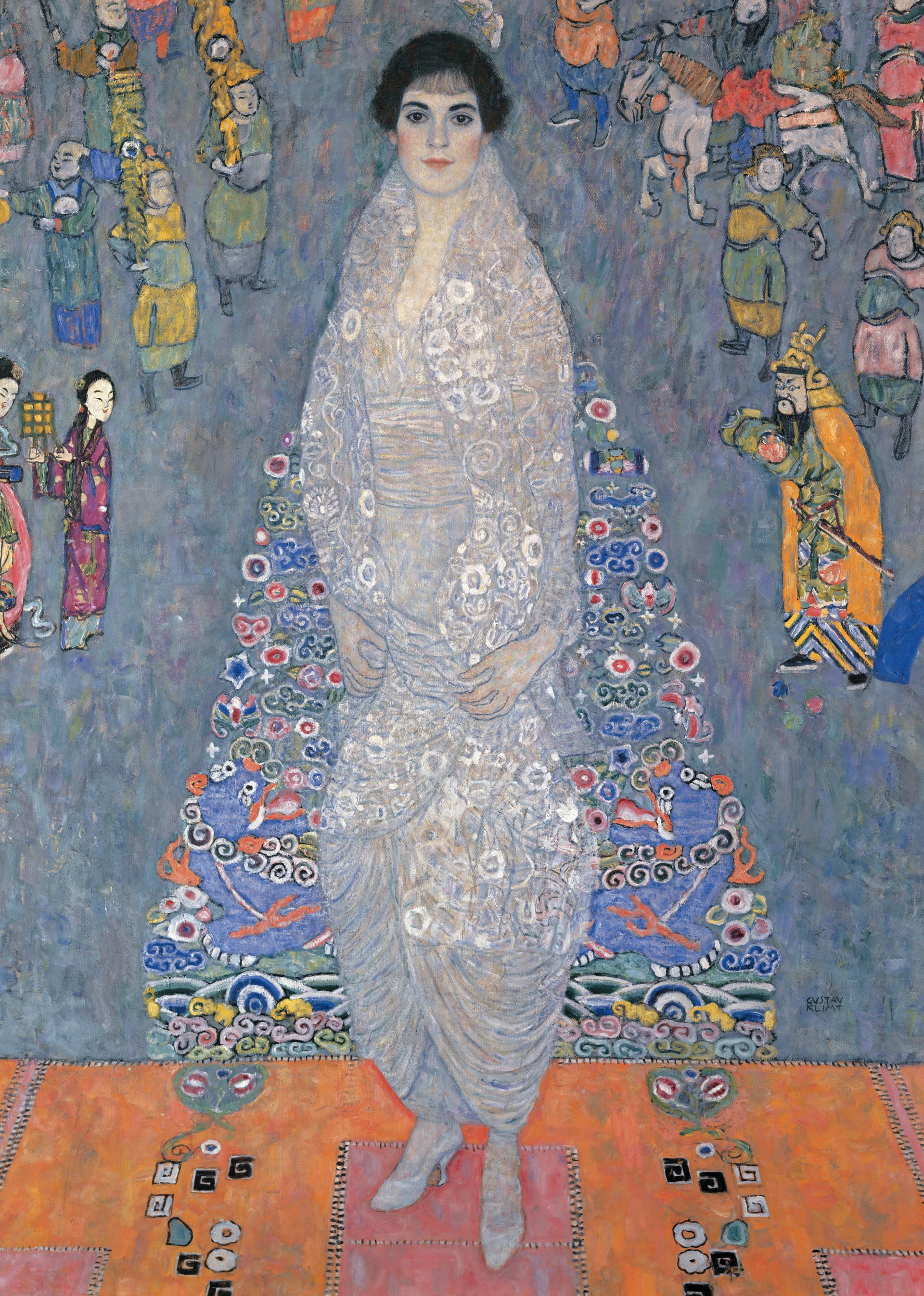
Gustav Klimt, «Ritratto di Elizabeth Lederer», venduto da Sotheby’s a 236 milioni di dollari.

The allure of the new discovery, Paris 2025

The demand for the very best and freshest 20th century artworks was emphatically clarified by the sale of a long-lost Picasso portrait of Dora Maar that surfaced in a sale at Hôtel Drouot. Every major collector in the world was aware of the fascinating back-story, leading to a long battle for the picture, which sold to the celebrated Nahmad family for a heady €32 million against key European, American and Asian bidders, many of whom had gathered in the saleroom.
I was asked after the sale whether the painting would have sold for more in London or New York. We will never know precisely, but the remarkable history of this lost painting created a unique buzz in the market. Indeed, I have always felt that a single major painting can achieve its maximum price if it is the sole focus of a dedicated experienced team of experts working at the top of the market and the sale is held live.
This has been the very successful formula of Loïc Gouzer’s Fair Warning auction platform, which promotes and auctions single major works at key moments in the season — a well-tried formula that has led to tremendous prices, most recently for the Brigitte Bardot Warhol of 1986, which achieved last season’s highest price for a Warhol at $16.7 million.

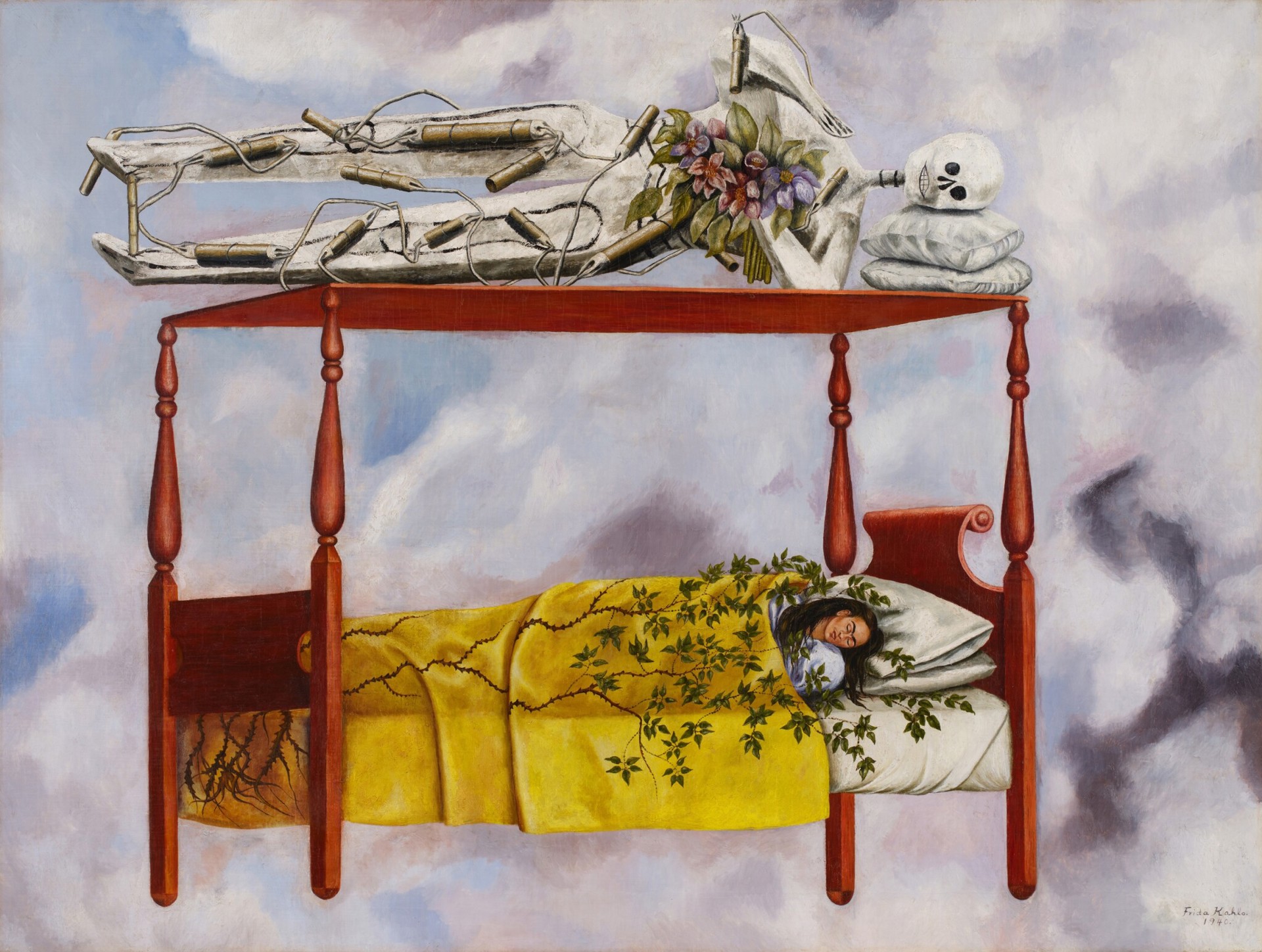
Frida Kahlo, «El sueño (La cama)», venduto per 54,7 milioni.

The impact of the Leonard Lauder sale in New York, November 2025 and the importance of reconvening the greatest collectors in the world

Rediscovered paintings such as Picasso’s Dora Maar carry with them a mystique that can confound normal price expectations; the same can be said for major collections which come to the block. This was certainly my experience with the great collections of Yves St Laurent in 2009, Peggy and David Rockefeller in 2018 and Paul Allen in 2022; every one of them included major works, and each established a new world record for a single-owner sale.
The success of these major collections also generated extraordinary energy in the general art market, and in November Sotheby’s sale of Leonard Lauder’s collection had the same impact. It drew all the major international collectors to New York, created a positive buzz that lifted the spirits of the market, and resulted in many more bidding wars for other masterpieces sold at Christie’s and elsewhere in the same week.
The sale was led by the astonishingly beautiful and striking Portrait of Elizabeth Lederer, which made the second highest price in auction history at $236 million. The evening sale provided Sotheby’s with a dramatic first night in their new Breuer building saleroom and a stellar audience saw the collection sell for a princely $527 million.
The mood was buoyant and celebratory. The strong price for the Klimt was impressive, but the professionals in the audience were even happier to see the high number of bidders for the work; competition came from six serious buyers, many of whom had been absent from the market for a few years. We saw strong competition from Asia, America and the Middle East — a perfect spread.
Tellingly, a disappointed Asian underbidder for the Lederer went on to buy one of the Klimt landscapes a few lots later. Re-engaging these major players at the top of the market is key; it brings stronger prices, renewed confidence, and inspires a new generation of collectors to compete in the saleroom.

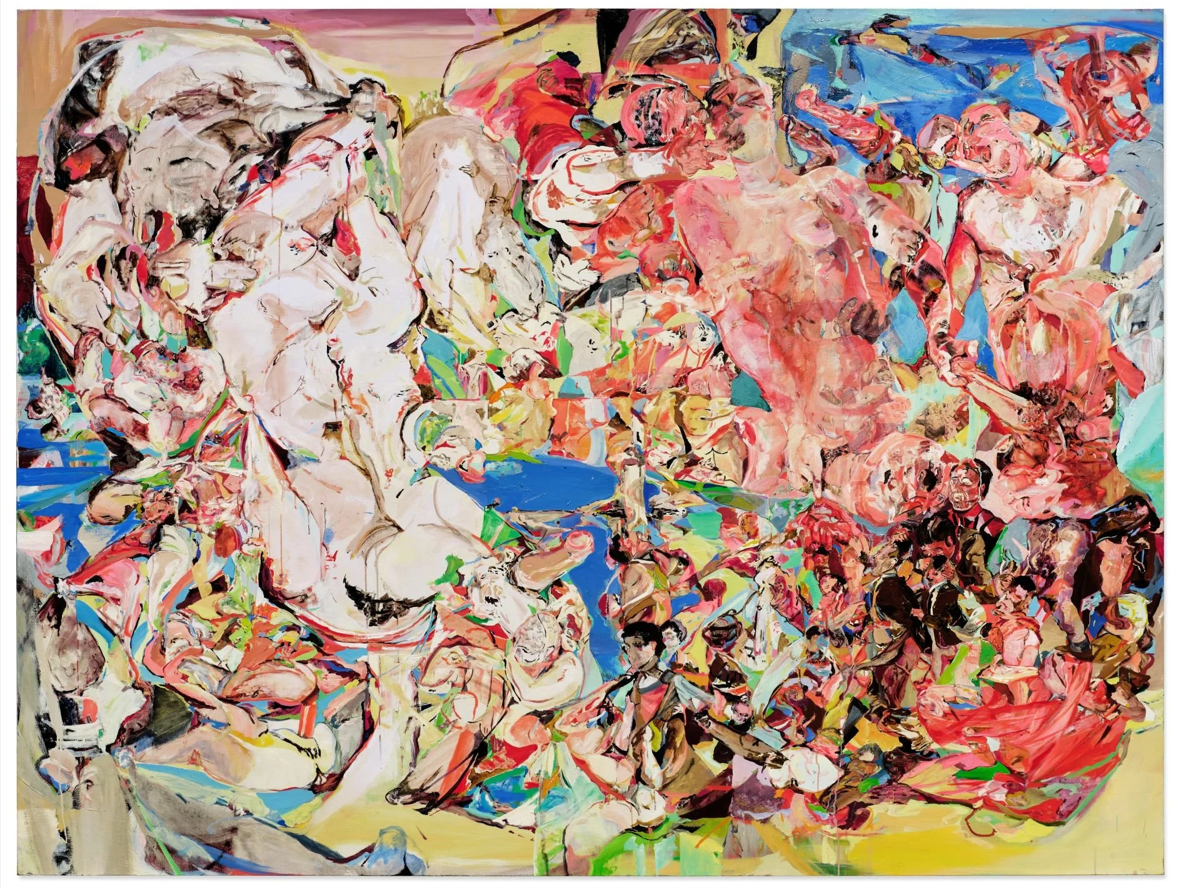
Cecily Brown, «High Society», 1997-98, venduto a 9,8 milioni di dollari.

Great collections and strong prices for stellar objects close the year – Will this upward trend continue?

The Lauder Collection generated great enthusiasm in the market, influencing the success of several major estates auctioned in the same week. Notable groups came from the estates of Elaine Wynn, Robert F. and Patricia G. Ross Weis, Nesuhi and Selma Ertegun, Cindy and Jay Pritzker, and Matthew and Carolyn Bucksbaum. In addition, fine single works from many other estates and institutions brought the tally of works making more than $10 million well into the 30s across the five celebratory days in America.
Works that performed well were mainly by artists who belong to the canon of great 20th-century painting, representing the much-discussed “return to order” as many art collectors move away from contemporary wet paint to more established artists. The roster of artists whose works sold very well is impressive and reassuring – to name a few: Mark Rothko’s No.31 (Yellow Stripe) $62.1 million; Claude Monet’s Nymphéas $45.8 million; Vincent van Gogh’s Romans parisiens $62.7 million; Frida Kahlo’s El sueño (La cama) $54.7 million; Jean-Michel Basquiat’s Peso Neto $48.3 million; Agnes Martin’s Garden $17.6 million; Richard Diebenkorn’s Ocean Drive #40 $17.6 million; and René Magritte’s Le jockey perdu $12.3 million.
Historically, it is very unusual to see so many major paintings sell from various properties in one season. It is even more unusual to see them all sell so successfully, but this owes much to market conditions: estimates were kept reasonable, and top buyers had been starved of major material to chase. The trick is to continue to find these masterpieces, both to refuel the market and to draw in confident new buyers.
Herein lies the challenge faced by Christie’s, Sotheby’s and Phillips in the coming months: will owners have the confidence to sell their prized objects in 2026? To my mind, they should seize the opportunity while supply is short and demand is high, which is always a winning formula for a seller.

The importance of third-party guarantees in a market which is re-finding its feet

In addition to the quality of the material on offer, by the time the sales took place, some 90% of the top 25 works had irrevocable bids from collectors who had made a formal commitment to bid on the works before the sale. Interestingly, irrevocable bids, which have often been seen as the crutch of a weak market, have now become indicators of confidence in quality. The majority of the top works in New York had backing bids to kick-start their sales, and it is striking how many of these elicited strong competition.
Previously frowned upon by open market purists, these secured bids now create significant buyer confidence and an energized market for sellers. Phillips’ variation on this type of bid, which involves placing a “priority bid” before the auction in return for a small reduction in their buyer’s premium rate, has also proved very successful. CEO Martin Wilson confirmed that over 50% of recent auction lots had confirmed selling bids at the low estimate well before the sale.

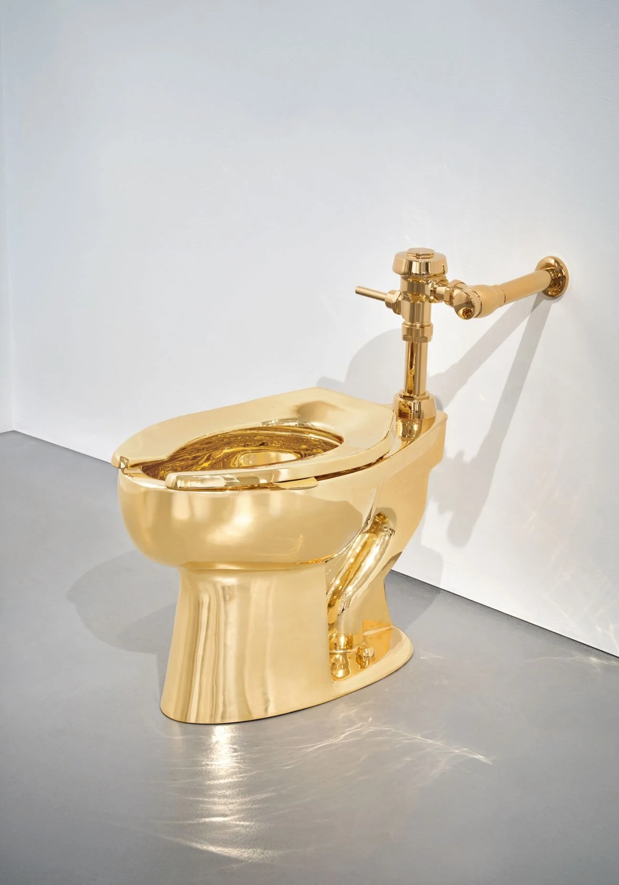
Maurizio Cattelan, «America», 2016, venduto per 12 milioni a «Ripley’s Belive it or not!».

The evermore selective market for 21st Century artists

The market also saw significant corrections and shifts. In Europe, we witnessed a marked withdrawal from the speculative hunt for emerging “wet paint” artists at high prices. American collectors have traditionally been quick to elevate the best artists of the new generation, and it is worth noting that three living artists truly shone in New York as 2025 came to a close. Kerry James Marshall’s powerful historical Portrait of John Punch (Angry Black Man 1646) achieved $7.15 million against an estimate of $4-6 million; Cecily Brown’s much-vaunted High Society sold at $9.8 million, establishing a new world record; and Amy Sherald’s striking A Clear Unspoken Granted Magic fetched an equally eye-catching $4.1 million. Each is now an artist with a great reputation and following, with prices illustrating their excellence. Expect more fireworks at auction from all of them in 2026 and beyond.

The rise in price for a selection of major artists whose prices have been fragile

Artists whose values are being reassessed upwards, in what is altogether a healthier market, are many and varied. Fernand Léger, for some time out of favour, had a tremendous week in New York, with four works from the 1910s and 1920s selling well with strong competition. His works may be at 75% of previous values, but his return to popularity is an important indicator.
Similarly, perhaps as aesthetic beauty rises as a key selling factor, Matisse is back. His Figure et bouquet sold for twice its estimate at $32.2 million after a fierce battle between a major New York dealer and a private American collector. The same American buyer of colourist works pursued Chagall’s Le songe du Roi David to a princely $26.5 million. Again, the simple aesthetic beauty of the painting drove the competition, heralding the continued resurgence of Marc Chagall’s prices across the board. His market has never been as strong since the demise of Japanese buying in the late 1980s.
Also very satisfying to see was the depth of bidding and consistently strong prices for Agnes Martin and Alexander Calder, two titans of the 20th century.

La vendita «White Glove» della collezione londinese di Pauline Karpidas per 101 milioni di sterline (137 milioni di dollari) è la vendita con un singolo proprietario più preziosa mai organizzata a Londra.

Some significant price adjustments in 2025

A number of major artists’ values are being challenged by the new generation of buyers. The markets for Ernst Ludwig Kirchner and the German Expressionists are no longer supported by the great German, Swiss, and American buyers of the late 1990s; Maurice de Vlaminck, Georges Braque, and the Fauves saw their prices peak about 20 years ago; some American Post-War abstract artists, such as Franz Kline, Robert Motherwell, and Frank Stella, have become less fashionable; and certain celebrated living artists, such as Christopher Wool, Mark Grotjahn, and Maurizio Cattelan, may have suffered from overexposure. All of these artists are likely to appear regularly at auction with more conservative estimates in coming seasons, and their prices will find new levels accordingly. There could be attractive opportunities for astute collectors in these areas in the seasons ahead, and experienced art advisors will likely play an increasingly important role as collectors navigate these nuances.

A healthier market in 2026

Looking at 2025 overall, there is no question that in the second half of the year both Sotheby’s and Christie’s implemented the right strategies. Single-owner collections were beautifully presented, with catalogues distributed well in advance of the sales. The houses secured reassuring third-party bids for the top lots, negotiated reserves as low as 70% of value to improve sold rates and allow markets to rebalance, and withdrew fewer lots to provide a more transparent view of weakening segments.
Overall, the auction experience was more engaging this year; Sotheby’s newly purposed Breuer building, for example, is a huge improvement over their previous exhibition spaces at York Avenue, and the new saleroom seems tailored to the auctioneers. The evening sales, benefitting from high-quality material, were far more enjoyable than anything seen in the past two years. Great quality at attractive price levels encouraged buyers back into the salerooms and undoubtedly contributed to the market’s recovery. The challenge for 2026 will be to recreate the same atmosphere and sell-through rates in mixed-property evening auctions without the prop and wow-factor provided by masterpieces from major single-owner collections such as Riggio, Lauder, Weis, and Pritzker. These set a very high bar for the coming year.

What to expect from the leading Auction Houses in 2026

At present, the driving objectives of the auction houses appear markedly different. Sotheby’s is focused on its major projects in the Middle East, bolstered by the Abu Dhabi Sovereign Wealth Fund (ADQ) as a significant partner and with a presence on the board. Their additional funding and ambition will no doubt support this growth. Sotheby’s also has strong strategic plans to expand its luxury business in new directions, from automotive sales—over $1 billion last year—to potentially luxury real-estate auctioneering, a nascent business facing competitive challenges.
Conversely, Christie’s is concentrating on major spring initiatives for Asia from its new Henderson Building in Hong Kong and appears committed to new ventures in Saudi Arabia.
In its year-end report, Christie’s revealed that its three most expensive works of 2025 were sold privately rather than through the traditional auction platform—a rarity, perhaps only previously seen when James Christie arranged the 1779 sale of Sir Robert Walpole’s masterpieces to Catherine the Great of Russia. In recent years, many of the world’s priciest works have been sold privately by senior advisors, dealers, or even auctioneers behind closed doors. While such discreet sales may boost Christie’s revenue, their secrecy does not necessarily enhance the firm’s public profile relative to its main competitor. Consignors base their decisions on recent public successes, and Sotheby’s now occupies the top position in the market, strengthened by strong November sales.Phillips’ total sales of $0.9 billion in 2025 were smaller than the other houses, but its 10% growth indicates a healthier market. In the competition between the two leading houses, Sotheby’s total sales reached $7 billion, up 17% from the previous year, while Christie’s totaled $6.2 billion, up 7%. It will be fascinating to observe how Christie’s CEO Bonnie Brennan and her team respond to closing this gap in 2026. Sotheby’s enjoyed a strategic advantage moving into the Breuer in autumn 2025, but the initial appeal of the new space may fade as consignors begin planning projects for March in London and May in New York.
Thankfully, the market is performing well again. Exceptional works continue to sell strongly, bringing excitement and drama to the saleroom. Here’s to another fascinating and energizing year at the top of the art market.

Jussi Pylkkänen, 17 febbraio 2026 | © Riproduzione riservata

Altri articoli dell'autore

Un anno difficile, con un calo complessivo del 23,5%. Alla base la mancanza di fiducia nelle trattative importanti dovuta al disordine geopolitico. Ma il contenimento dei prezzi crea opportunità interessanti. E intanto continua l’apertura ai mercati di Cina e Medio Oriente. Per il 2025? Ci sono segnali positivi

Art Market Review & Forecast – «A View from the Room, the Auction World in 2025» | Jussi Pylkkänen

Art Market Review & Forecast – «A View from the Room, the Auction World in 2025» | Jussi Pylkkänen